Yet these seemingly simple cabinets play a vital role in modern industry. Walk through almost any manufacturing facility, water treatment plant, energy facility, or food processing site and you'll find industrial enclosures protecting critical electrical and automation equipment that keeps the business' operations running safely and efficiently.
Over the past six decades, industrial enclosures have evolved dramatically. What began as little more than fabricated metal boxes has become a sophisticated ecosystem of engineering, digitalisation and climate control technology. Today, enclosure design has a direct impact on productivity, reliability, energy efficiency and sustainability.
What is an Industrial Enclosure?
Their purpose goes far beyond protection. Modern enclosures are engineered to:
- Protect sensitive equipment from environmental conditions
- Safeguard personnel from electrical hazards
- Support optimal operating temperatures
- Improve cable management and organisation
- Provide scalable infrastructure for future expansion
- Maximise system reliability and uptime
As industrial systems become increasingly connected and automated, the enclosure has become a critical part of the overall operational strategy.
The Beginning of Standardisation
In the 1950s and early 1960s, specifying an industrial enclosure was a lengthy process. Panel builders typically relied on local manufacturers to produce bespoke cabinets to the required dimensions. While functional, these solutions often involved long lead times and limited flexibility.
A major turning point came in 1961 when Rittal introduced the concept of standardised industrial enclosures. Instead of waiting weeks for a custom-built cabinet, panel builders could select from a range of pre-engineered enclosure sizes that were available immediately.
The approach reduced lead times, simplified procurement and helped establish a new industry standard. The principle was simple but revolutionary: create a systematic enclosure platform that combined reliability, availability and scalability.
Today, standardisation remains one of the foundations of modern enclosure design.
The Rise of Modular Enclosures
As industrial automation expanded throughout the 1970s and beyond, so too did the demands placed on electrical control systems.
Traditional enclosure designs presented a challenge. When capacity was reached, engineers often had no option but to install an entirely separate cabinet, increasing complexity and consuming valuable floor space.
The introduction of modular enclosure systems changed this.
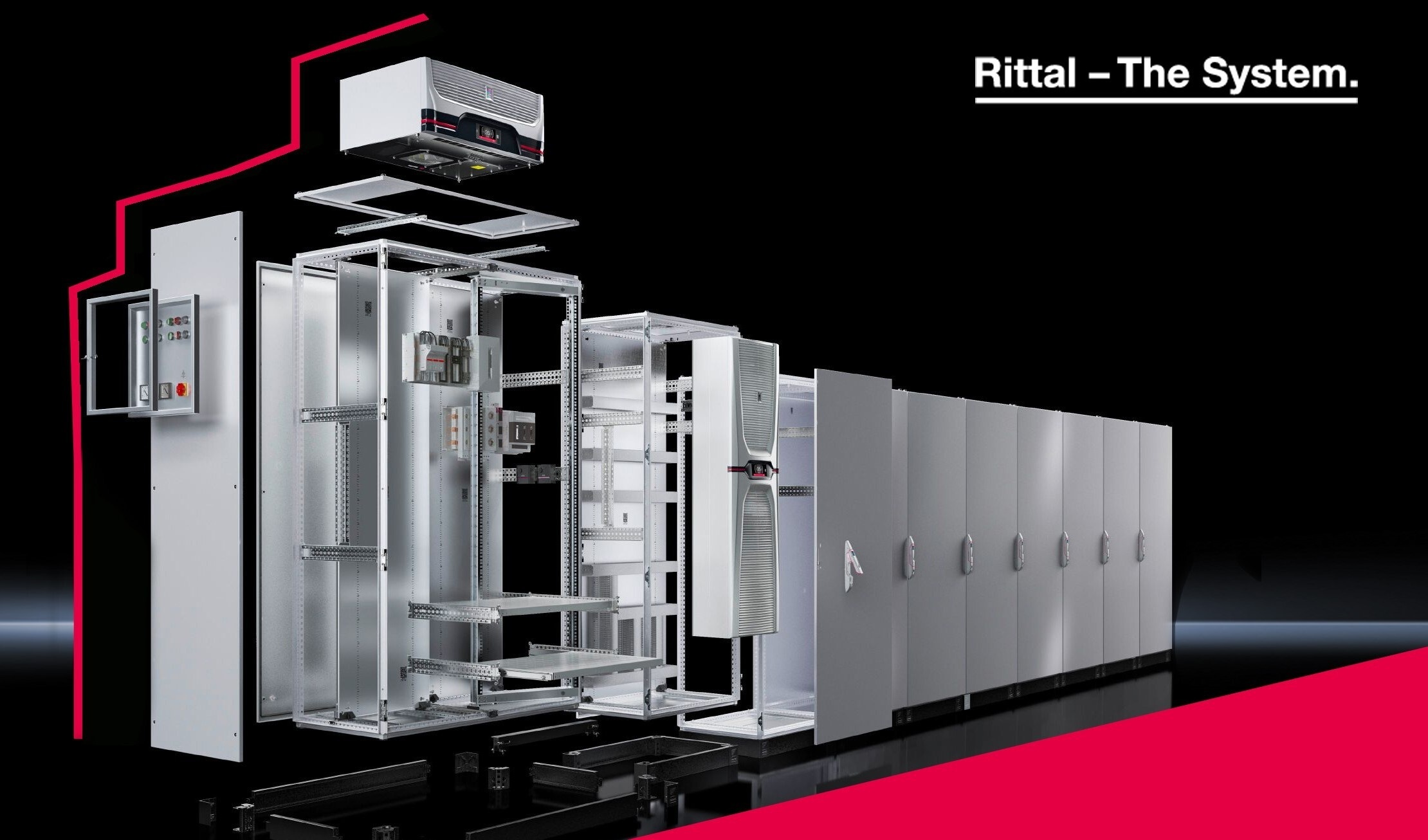
By replacing fixed cabinet structures with engineered frame systems, manufacturers gained the flexibility to expand enclosure configurations as operational requirements evolved. Additional frame sections could be added without redesigning the entire system, creating a scalable and future-ready approach.
This modular philosophy continues to shape modern enclosure design today. Recent innovations such as the VX platform have further enhanced flexibility by simplifying installation processes and reducing the number of accessories required across multiple projects.
For panel builders and manufacturers, this translates into:
- Greater design flexibility
- Faster assembly times
- Reduced inventory requirements
- Improved project efficiency
- Lower manufacturing costs
Digitalisation Is Transforming the Value Chain
Perhaps the most significant enclosure innovation in recent years has not been physical at all. Digitalisation is transforming how enclosures are designed, specified, manufactured and maintained.
Advanced engineering software enables panel builders to create detailed digital models before production begins. Components can be positioned virtually, clearance checks completed and manufacturing instructions generated automatically.
These digital designs can then be sent directly to automated machining and production equipment, allowing cut-outs and modifications to be completed with exceptional speed and accuracy. Processes that once required skilled technicians many hours to complete manually can now be performed in a fraction of the time.
This integration between software and manufacturing provides several advantages:
- Faster project delivery
- Reduced risk of errors
- Improved consistency
- Greater productivity
- Better utilisation of skilled engineering resources
The emergence of digital twins and online configurators is taking this a step further, allowing engineers to build and validate enclosure designs before purchasing or manufacturing begins.
Industrial Enclosures
Industrial enclosures have come a long way from the fabricated steel cabinets of the past.
Today they serve as the physical infrastructure supporting digital manufacturing, industrial automation and Industry 4.0 initiatives. As organisations continue to invest in smart manufacturing technologies, the enclosure will play an increasingly important role in enabling resilient, efficient and connected operations.
The next chapter will likely see further advances in:
- Digital engineering
- Automated panel building
- Intelligent climate control
- Smart monitoring
- Sustainable design practices
For manufacturers and panel builders alike, the enclosure is no longer simply a box. It is a strategic asset that helps drive productivity, reliability and long-term competitiveness.
Rittal’s white paper on the role of PDUs in IT infrastructures of all sizes can be downloaded here:

Further information at www.rittal.co.uk and www.friedhelm-loh-group.com or on twitter @rittal_ltd.
FAQ's